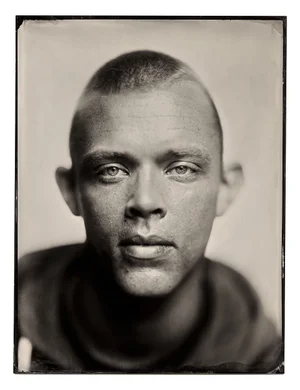
Exploring Consciousness with DMXE and Zeus Tipado
Let me start by saying: this is not for everyone. And that’s completely fine. If you’re not interested in psychedelics or altered states, feel free to skip this entirely.
But if you are someone who’s curious about the intersection between consciousness and creativity—this is something I feel compelled to explore and share. I hope my audience approaches this with the same open-mindedness that I bring to the work itself.
Why I Did This
As an artist, I’ve always relied on curiosity as a compass. Curiosity—not comfort—is what pushes me into new work. Into new processes. Into the unknown. I’ve never wanted to repeat myself creatively, and that means constantly looking for new tools to stretch perception and reframe what I think I know.
Recently, that curiosity led me to psychedelics—not as escape, but as input. I wanted to explore whether an altered state of consciousness could directly feed into the way I make visual work. Could a psychedelic experience become not just an influence, but a visual translation of something internal?
This journey was part research, part ritual. I had no intention to exhibit the resulting artworks. The goal was simpler: to see if I could transform an invisible state into visible form. What follows is a personal account—not an endorsement or recommendation. This is meant purely as a reflection for those who are interested in the intersection of consciousness, creativity, and experimentation.

Artwork made 1hr after the psychedelic experience
Meeting Zeus
Two years ago, during Paris Photo, I was introduced to Zeus Tipado by a mutual friend and owner of the Fahey Klein Gallery in Los Angeles. Zeus is a neuroscience researcher at Maastricht University, focusing on psychedelic substances like DMT, ketamine, and a lesser-known compound called DMXE.
What struck me about Zeus wasn’t just the science—it was the sensitivity. He didn’t speak about psychedelics like a chemist or a trendwatcher. He spoke about experience. About sound. About how memory and music and spatial perception intertwine under the influence. We kept in touch. Only recently did our schedules align—and the intention feel right—to finally collaborate on an experience together.

Artwork made after the psychedelic experience
The Experience
Zeus had created a space unlike any I’ve ever encountered. Not clinical, not ceremonial, but deeply sensory. The floor was covered in layered fabrics and soft textures. A single aroma, vanilla, floated through the room. I lay back into a nest of pillows and blankets, blindfolded, and allowed the playlist, composed of ambient soundscapes and field recordings, to pull me inward.
The compound we used was DMXE, a synthetic dissociative psychedelic discovered in 2022. Related structurally to ketamine and MXE, it’s known for its short duration (90–120 minutes) and its dreamlike, introspective qualities. It doesn’t generate the sharp visuals of psilocybin or LSD, instead, it seems to reconstruct emotional and sensory fragments of memory. Within minutes, I felt myself descending—not physically, but perceptually. The sensation was of weight, of gravity turned inward. I was melting into a slower space. Not detached, but submerged.

Artwork made after the psychedelic experience
Memory as Medium
What made this experience so distinctive was how familiar it felt. Rather than showing me foreign visions, DMXE plunged me into personal visual memories—artworks I had made, moments I had felt, atmospheres I had only half-forgotten.
At one point, I found myself walking through a rainy Parisian street almost identical to an AI-generated image I had created months earlier. I remember thinking: How can I make new work from this if I’m already inside my own creation? My body became secondary. My hands began to move on their own, gently, rhythmically, as if interpreting the sounds around me. Despite the blindfold, I could see them moving. Or I thought I could. The mind, untethered, filled in the blanks.
Even scent played tricks. The only smell in the room was vanilla, yet during the journey I experienced five or six distinct aromas: wood, incense, metal, earth. My sense of smell had become a kind of hallucination—one rooted, again, in memory.

Artwork made after the psychedelic experience
Internal Landscapes
The spaces I moved through were not filled with people or beings. They were vast and abstract, like sculptural environments made of feeling.
Cottony valleys, vibrating instruments, infinite space behind the blindfold. Circular patterns—ones I vaguely recognize from earlier trips or even from my own photographic work, floated through these inner landscapes.
It wasn’t a story. It wasn’t a vision. It was a topology of thought.

Artwork made after the psychedelic experience
From State to Studio
The next day, I went into the studio and began working. Not with a plan, but with echoes. I created visual studies based on what I had felt—attempting to translate textures, rhythms, and inner architectures into form.
It wasn’t about representation. It was about resonance.
The original question: can a psychedelic state be turned into an image? remains open. But the process of trying felt more like remembering than creating. Like the trip had already made the work, and my job was just to bring it back with as little distortion as possible.

Artwork made after the psychedelic experience
What is DMXE?
DMXE (3-Me-2’-oxo-PCE) is a synthetic dissociative psychedelic from the arylcyclohexylamine family, which also includes ketamine and MXE. It acts primarily on the NMDA receptors in the brain, altering perception, cognition, and sensory integration.
Unlike traditional psychedelics like psilocybin or LSD, DMXE is often described as:
Dreamlike and emotionally immersive
Grounded in personal memory
Less visual, more spatial and sensory
Capable of altering smell and body perception
Short-acting (roughly 1.5–2 hours)
While still under-researched, some believe DMXE holds therapeutic and creative potential—especially in structured, supported settings.
This article is not a medical or legal guide. Always approach such substances with caution, respect, and proper context.
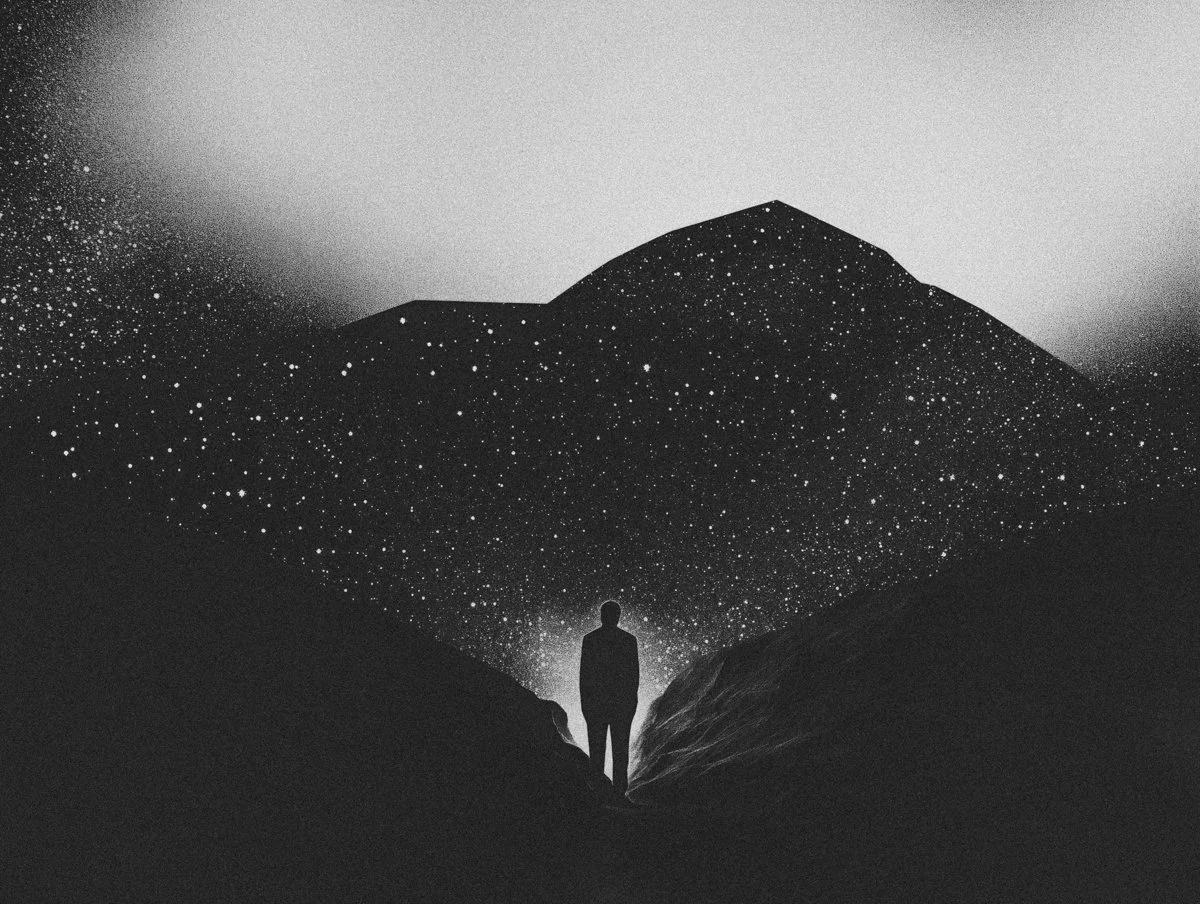
Artwork made after the psychedelic experience
Supported by PsyDAO
This experience—and the research surrounding DMXE—is supported by PsyDAO, a decentralized, community-driven platform reshaping how psychedelic science and art are funded. PsyDAO calls itself A New Set & Setting in psychedelics. Through crowdfunding models powered by blockchain technology, they channel resources from communities directly into artists, scientists, and indigenous initiatives. They’ve funded everything from Amazonian textile preservation to AI art and sculpture.
To support Zeus’s research on DMXE, PsyDAO launched and sold a $DMXE token. Revenue from trading fees helps fund ongoing work, with a long-term goal of bringing the compound through the FDA approval process. It’s an ambitious model—and one that reflects the same curiosity and openness that drew me to this experience in the first place.
Final Words
Psychedelics aren’t shortcuts. They aren’t aesthetics. And they’re definitely not answers.
But in the right hands, under the right conditions, they can become mirrors—strange, shifting mirrors that reflect parts of yourself back to you in new languages.
This was one of those journeys. A quiet disruption.
And I’ll be carrying it forward—in memory, in practice, and maybe, in pictures.